

Teaching AI Models to Talk: How Cross-Model Collaboration is Redefining Intelligence
Cross-model collaboration is the future of AI. By letting models communicate, critique, and co-create, Kumari AI delivers responses that are smarter, fairer, and more reliable, proving that the best intelligence isn’t solitary, it’s shared.
AI models have traditionally been trained in isolation, optimized for specific tasks, and deployed individually. But real intelligence thrives in collaboration.
We call this cross-model collaboration: enabling multiple large language models (LLMs) to cooperate, critique, and co-create before delivering a final, unified answer. The result? More robust reasoning, more reliable creativity, and smarter decisions.
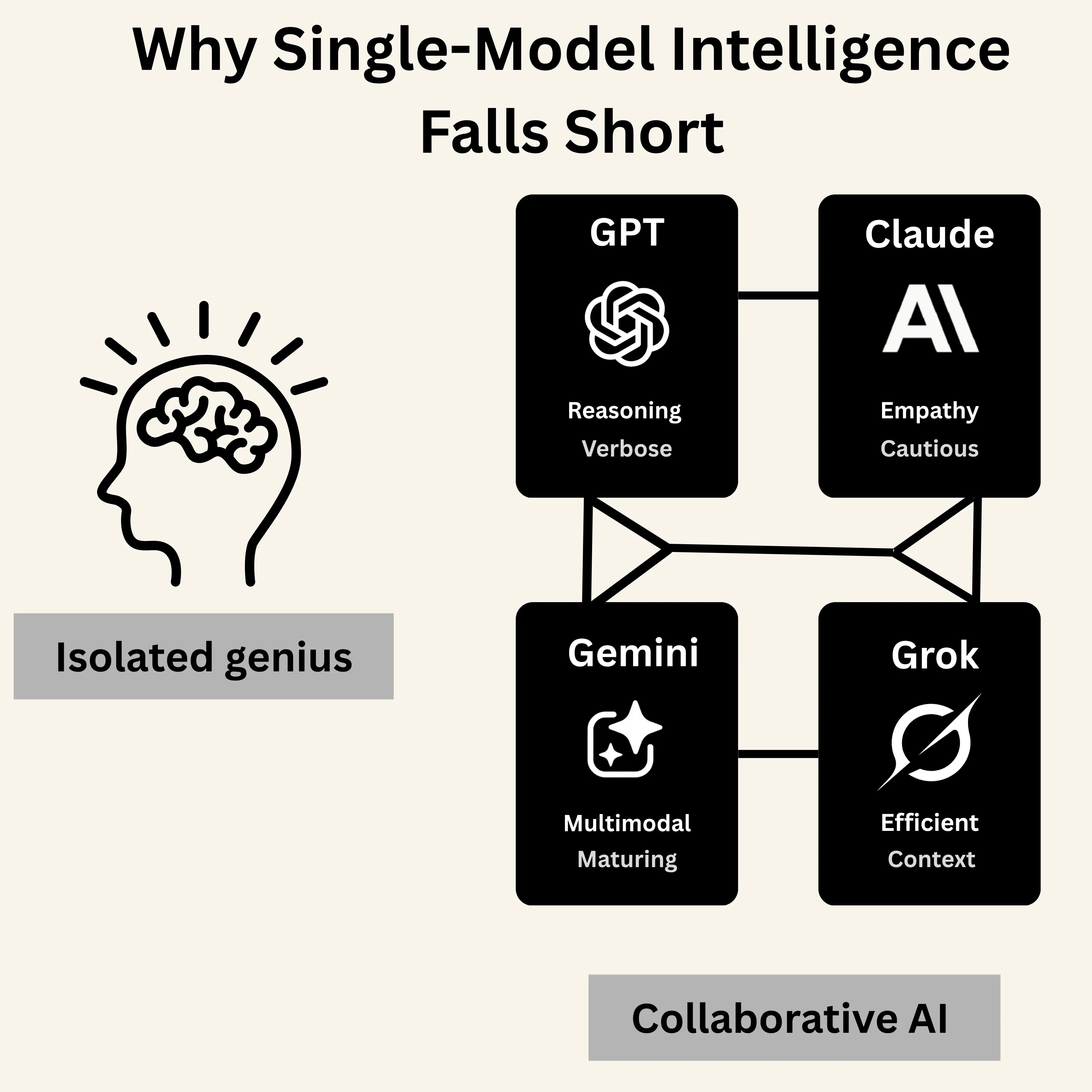
Why Single-Model Intelligence Falls Short
Each model brings unique strengths and blind spots:
| Model | Strength | Limitation |
|---|---|---|
| ChatGPT | Exceptional reasoning and structure | Can be verbose |
| Claude | Empathic and instruction-following | Occasionally too cautious |
| Gemini | Outstanding multimodal understanding | Still maturing in reasoning |
| Grok | Fast, efficient, and lightweight | Limited context retention |
Relying on one model is like asking a single expert to run an entire company.
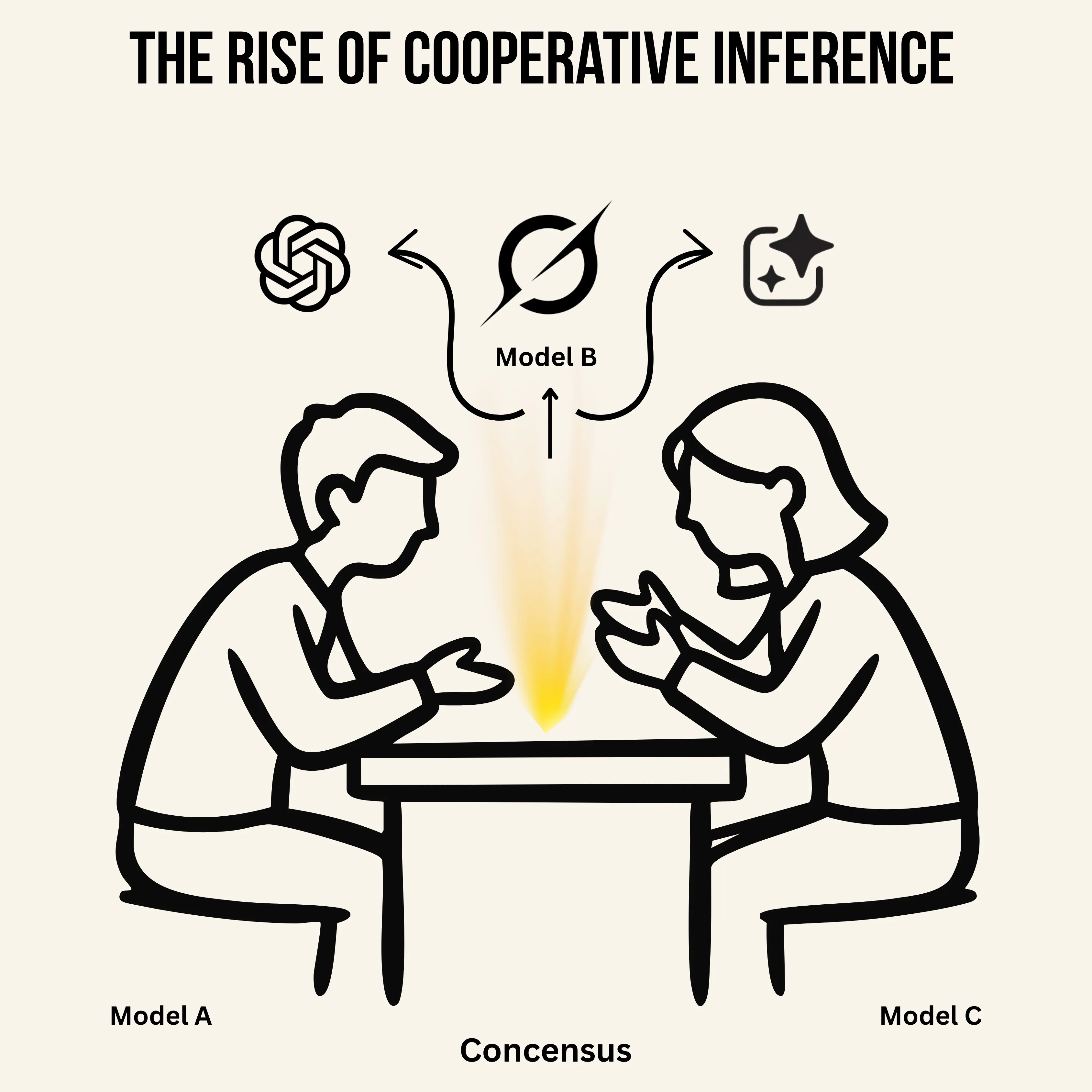
Imagine a council of models, each contributing its perspective before reaching a consensus.
The Rise of Cooperative Inference
Cooperative inference allows multiple AI systems to jointly evaluate, refine, and validate an answer before it reaches the user.
A healthcare assistant example:
- One model analyzes medical data
- Another checks clinical guidelines
- A third ensures clarity for patients
Together, they produce safer, clearer, and more trustworthy outcomes.
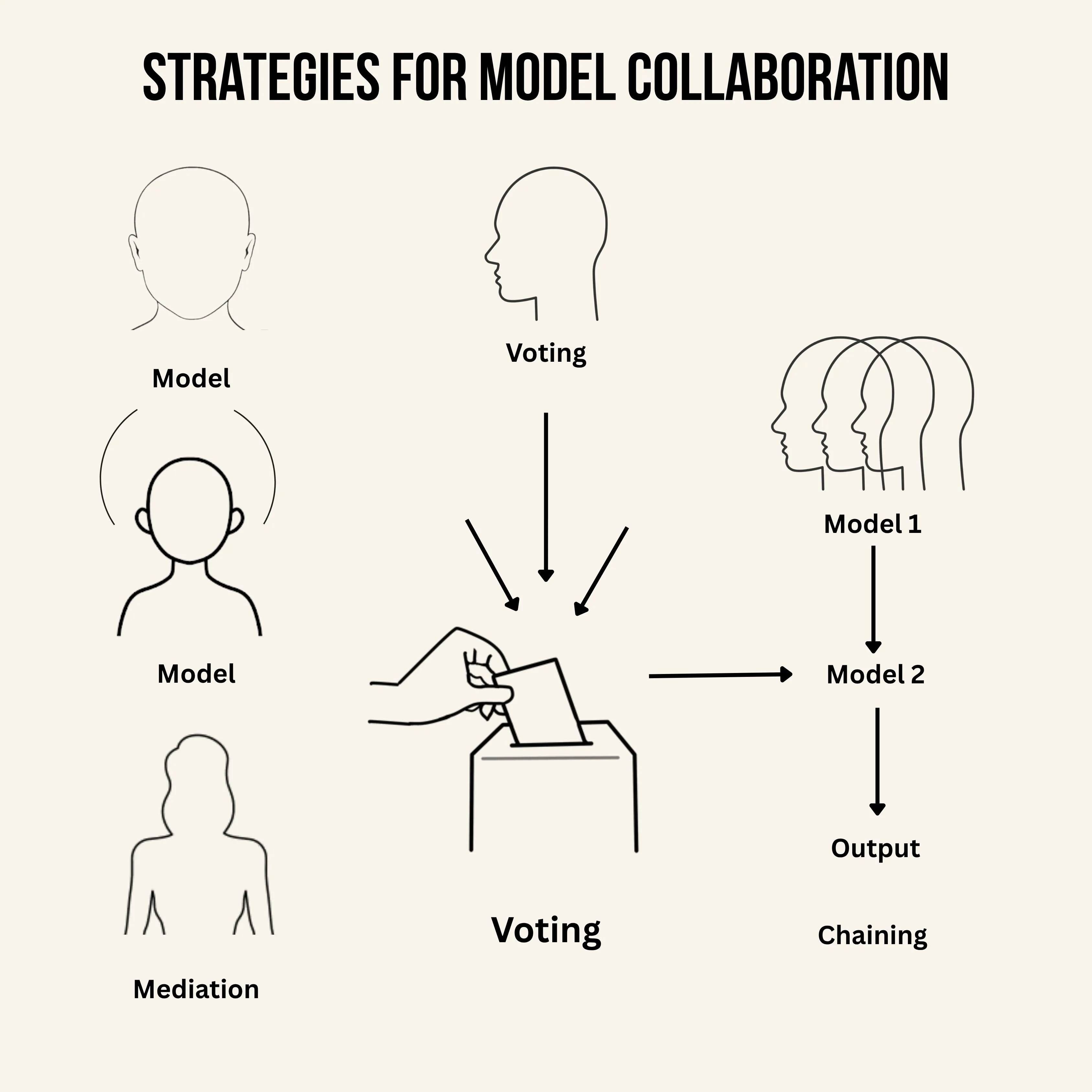
Strategies for Model Collaboration
-
Mediation — Model-to-Model Dialogue
A mediator listens to multiple model outputs, compares reasoning paths, and synthesizes a refined result.
Example: One model provides concise logic, another adds emotional tone, the mediator blends both for a balanced response. -
Voting — Consensus by Committee
Models respond independently; a ranking or voting mechanism selects the most reliable answer. -
Chaining — Sequential Specialization
Models collaborate in sequence: one extracts, another interprets, another expresses.
Example: One model retrieves data, another summarizes insights, and a third turns them into a clear narrative.
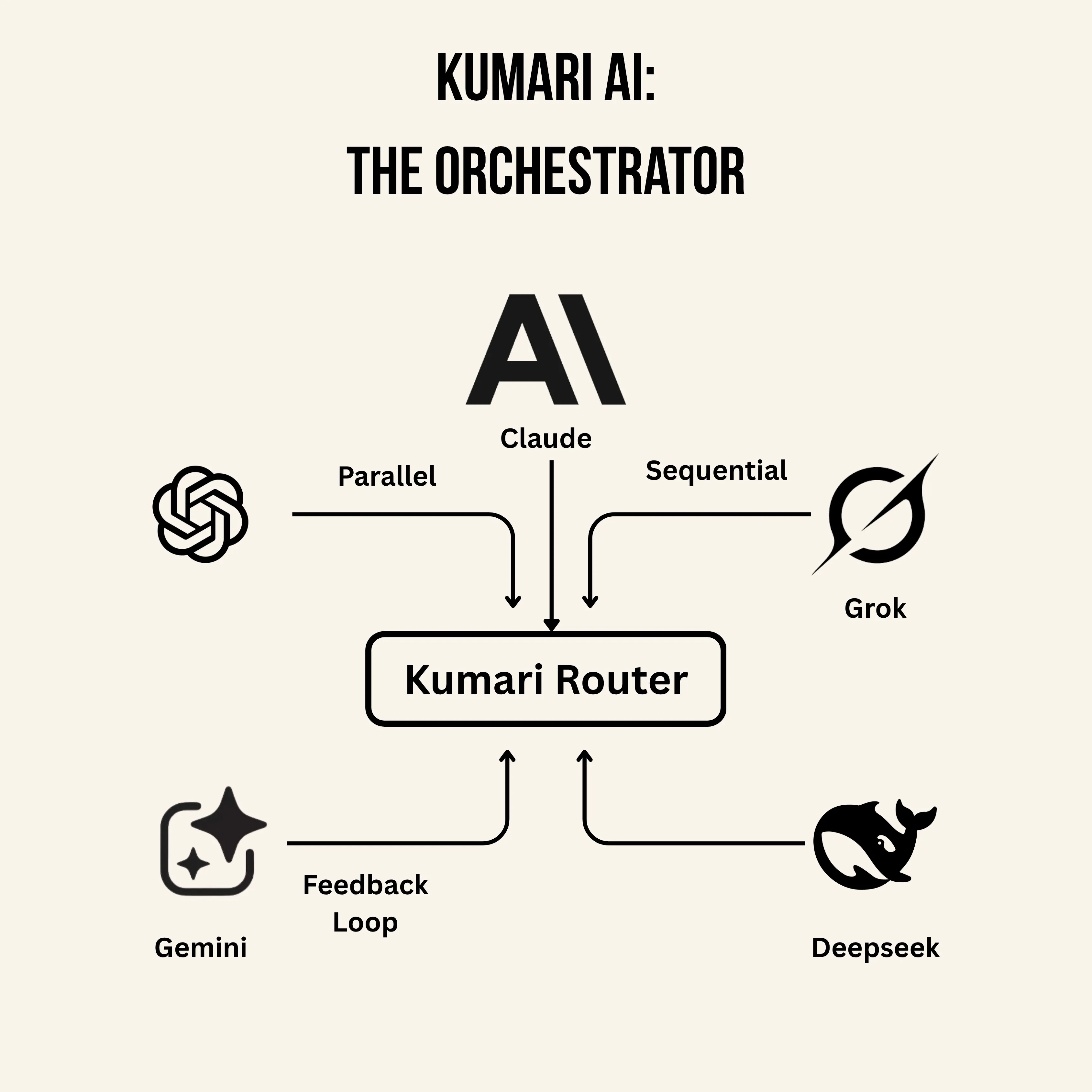
Kumari AI: The Orchestrator of Model Cooperation
Kumari AI’s router enables models to work together intelligently. It decides when a single model is enough and when multiple models improve outcomes.
Key features:
- Parallel & Sequential Inference: Models working together or in sequence
- Confidence Scoring & Feedback Loops: Ensures consistency and correctness
- Learning-Based Routing Intelligence: Continuously improves based on performance
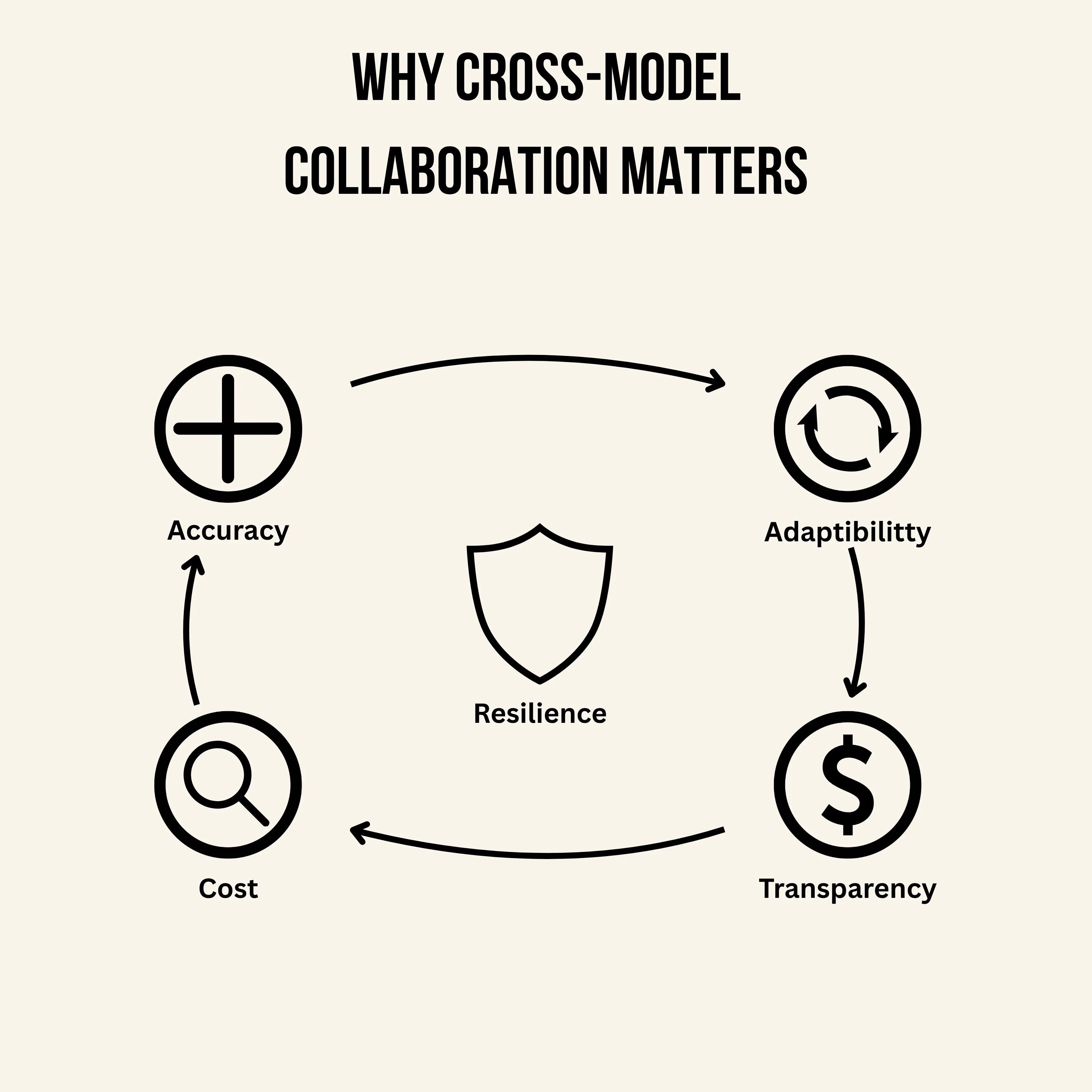
Why Cross-Model Collaboration Matters
| Benefit | Description |
|---|---|
| Accuracy | Reduces hallucinations by validating answers from multiple perspectives |
| Resilience | Other models compensate if one fails or slows |
| Adaptability | Dynamically routes tasks across domains |
| Cost Optimization | Uses lightweight models for simple tasks, ensembles for critical ones |
| Transparency | Tracks reasoning paths, enabling explainable decisions |
Toward a Networked Intelligence Future
The future of AI is collaboration. Models will exchange signals, reach consensus, and collectively enhance decision-making. Kumari AI is the connective tissue enabling this synergy.
Closing Thought
In the age of solitary models, intelligence was measured by performance. In the era of connected models, it will be measured by collaboration. Welcome to AI synergy, where machines don’t just think—they co-think.
Learn More
Discover how Kumari AI is building the world’s first adaptive multi-model router, enabling seamless collaboration across GPT, Claude, Gemini, Mistral, DeepSeek, and more.
👉 Explore Kumari AI or Contact Us to see how cross-model cooperation can transform your AI systems.